
Author: Fitzgerald Mazda of Annapolis Team
Whether you are navigating the narrow, historic streets of downtown Annapolis or commuting along the busy Route 50 corridor from Bowie to Baltimore, keeping your vehicle in peak condition ensures a confident, joyful drive. For decades, Fitzgerald Mazda of Annapolis has been a trusted cornerstone of the local community, building our reputation on a deep understanding of what it takes to keep your vehicle thriving in our unique coastal environment. We take pride in serving as your reliable, long-term automotive partner, offering unmatched expertise in servicing and maintaining Mazda vehicles for drivers across Arnold, Severna Park, and Edgewater.
This guide explores why adhering to the factory-recommended maintenance schedule is far more than just a routine suggestion. From the humid summer days near the Chesapeake Bay waterfront to the occasional winter frost, local weather patterns demand proactive care to preserve the Jinba Ittai—the signature harmony between car and driver—that you expect from your Mazda. By following these tailored guidelines, you protect your vehicle’s long-term durability and performance, ensuring every weekend escape to Quiet Waters Park remains as refined and responsive as the day you first took the wheel.
What Does "Recommended Maintenance" Truly Mean for Your Mazda?
When you hear "recommended maintenance," you might just picture a standard oil change. In reality, it is a comprehensive, mileage-based blueprint developed by engineers at Mazda to keep your vehicle performing at its absolute best. It involves a precise schedule of preventative care—such as inspecting the serpentine belt, measuring brake pad thickness, and rotating tires typically every 5,000 to 7,500 miles. What this means for Annapolis drivers is that your vehicle receives targeted attention at the exact right stage of its life, preventing minor wear from escalating into major repairs.
Think of it as a proactive wellness plan for your vehicle. Just as you would schedule regular health check-ups, a Mazda3 Sedan or CX-5 needs consistent care to maintain its signature responsive feel. Whether you are braving peak-hour traffic on Route 50 commuting from Arnold or making quick runs down the Forest Drive corridor, this engineered regimen ensures your drivetrain and suspension are ready for the daily grind. The contrast in cost is very real: catching a cracked CV boot during a routine 15,000-mile multi-point inspection is a simple fix, whereas ignoring it can eventually mean replacing an entire, much more expensive axle assembly down the road.
Ultimately, sticking to this factory-tailored roadmap provides serious peace of mind for the long haul. It preserves that intuitive, Jinba Ittai driving dynamic that made you choose the brand in the first place. From family errands in Severna Park to weekend drives down to the Annapolis Harbor, keeping up with recommended service ensures your car stays reliable, safe, and ready for whatever the Maryland seasons bring.
How Does Regular Service Enhance Your Mazda's Safety?
What this means for Annapolis area drivers is that routine maintenance goes far beyond protecting your engine—it preserves the security and harmony between you and the road. Whether you are navigating the tight, historic intersections near the United States Naval Academy in a nimble Mazda3 Sedan or managing abrupt stop-and-go congestion on Route 50, your vehicle's protective capabilities heavily depend on the health of wearable components. Advanced technologies, such as Mazda’s i-ACTIVSENSE® safety suite, require well-maintained mechanical systems to function as engineered; after all, a pre-collision alert is only as effective as the mechanical grip and braking power available to execute the stop.
The National Highway Traffic Safety Administration (NHTSA) continually emphasizes that proactive, periodic vehicle care is a leading factor in preventing on-road accidents. This is incredibly relevant given our varied Maryland driving conditions. From sudden, slick summer downpours along the Chesapeake Bay waterfront to freezing winter mornings commuting from Edgewater or Severna Park, seasonal shifts put constant stress on your car's contact points. Because just a small decrease in tire tread depth or a few millimeters of brake pad wear can increase your stopping distance by crucial feet, paying regular attention to these foundational systems ensures your family stays secure. Let's look closer at how those specific components directly influence your everyday safety.
Why Are Brake Inspections and Fluid Changes Critical?
A firm, responsive brake pedal is essential to the harmonious connection between car and driver that Mazda engineers strive for, but the coastal Maryland climate puts unique demands on these stopping systems. When you are navigating sudden traffic slow-downs on Route 50 or cruising down toward the Annapolis Harbor, you rely on precise hydraulic pressure and healthy friction materials to keep your vehicle completely under your control.
Brake Pad & Rotor Checks: Routine maintenance involves measuring the remaining friction material on your brake pads—technicians typically suggest replacement when they wear down to around 3 to 4 millimeters—while also inspecting the metal rotors for heat scoring or warping. Catching uneven wear early ensures your Mazda CX-5 or Mazda3 Sedan maintains predictable stopping power, which is exactly what you need when dealing with unpredictable tourist congestion near Historic Annapolis or driving through a sudden summer downpour.
Brake Fluid Replacement: Because standard automotive brake fluids (like DOT 3 or DOT 4) are hygroscopic, they naturally absorb moisture from the humid air blowing off the Chesapeake Bay. Over time, this water content lowers the fluid's boiling point, potentially causing a spongy, unresponsive pedal feel during heavy braking. While many manufacturers recommend periodic brake fluid service (often every 2–3 years) depending on the model and driving conditions, exact intervals vary across different vehicle years. Always refer to your owner's manual or consult with a factory-trained technician to verify the correct timeline for your specific car.
How Does Tire Maintenance Contribute to Safety?
That signature feeling of being at one with your Mazda completely depends on your tires, which are the only physical connection your vehicle has to the pavement. When you are navigating the tight, historic streets of downtown Annapolis or braking for sudden traffic on Route 50, tire grip and stability dictate how safely your car responds. Simple, routine care is the best way to keep this critical bond intact.
Tire Rotations: Swapping your tires' positions every 5,000 to 7,500 miles—the typical service interval for a Mazda3 or CX-5—prevents uneven tread degradation. Because front tires carry the engine's weight and handle steering duties, they wear down faster if left in one spot. Regular rotation preserves a uniform grip on all four corners. For drivers heading out toward Quiet Waters Park, that translates directly to predictable, confident cornering on winding local roads.
Tire Pressure: Air naturally escapes over time, and a tire's pressure drops by roughly 1 PSI for every 10-degree dip in outside temperature. If you commute down Rowe Boulevard (MD 70) on a chilly Maryland morning on underinflated tires, you compromise both responsive steering and fuel efficiency, while also risking an overheated tire on the highway. Checking your tire pressure once a month is a quick, high-impact habit that guarantees your Mazda handles exactly the way it was engineered to.
Why is Routine Maintenance a Smart Financial Decision?

What makes routine maintenance a smart financial move for Annapolis drivers? Simply put, sticking to a predictable service schedule protects your long-term budget by preventing small, natural wear from spiraling into major, unexpected repairs. Whether you are commuting in a Mazda3 Sedan via Route 50 toward Washington, D.C., or navigating the tight, brick-lined streets of Historic Annapolis in a nimble CX-5, proactive care preserves both the monetary value and the effortless driving feel of your vehicle. Skipping a trip to the service center might feel like an easy way to save time today, but it almost always compromises your car's reliability and costs you more down the road.
Mazda engineers design every component to operate in perfect harmony, which is why adhering to factory intervals is so critical to your bottom line. For instance, changing your synthetic oil every 5,000 to 7,500 miles—depending on your specific driving habits—and replacing engine coolant around the recommended 120,000-mile mark ensures optimal thermal management while preventing premature engine wear. Think of it this way: replacing worn brake pads on schedule takes a fraction of the time and expense compared to repairing a damaged brake caliper later. By treating maintenance as an investment rather than a chore, you actively secure your vehicle's future resale value and guarantee lasting peace of mind for every weekend escape to Quiet Waters Park.
How Does Maintenance Preserve Your Car's Value?
Staying up to date on your Mazda's service schedule does more than just keep the engine running smoothly—it directly protects your financial investment. For drivers around Annapolis, this matters because a well-documented history proves the car has been properly prepared for everything from daily stop-and-go commuting on Route 50 to hauling weekend gear to Quiet Waters Park. According to valuation experts at Kelley Blue Book, future buyers and trade-in appraisers routinely offer a premium for vehicles with a clear, meticulous paper trail. Think about the contrast: handing over a digital file or a neatly organized folder showing consistent 7,500-mile synthetic oil changes on a Mazda CX-5 2.5 S tells a vastly different, more reassuring story than an empty glovebox.
Organizing your service records essentially builds a trust-inspiring resume for your vehicle. When a prospective buyer sees that a Mazda3 Sedan Gas model has had its brake pads inspected and powertrain fluids serviced right on the factory schedule, their confidence in the car's long-term reliability soars. By saving your receipts and keeping a detailed log of every tire rotation and filter replacement, you remove the anxiety of the unknown for the next owner. That peace of mind easily justifies top dollar when you are finally ready to trade in or sell.
Can Following the Schedule Really Prevent Expensive Repairs?
Yes, adhering to your Mazda’s maintenance timeline is the most effective way to avoid sudden, steep repair bills. What this means for local drivers is uninterrupted peace of mind, whether you are navigating the tight, historic streets near the Naval Academy in a nimble Mazda CX-30 or merging into heavy Route 50 traffic during a daily commute. Trusted automotive advocates like Consumer Reports frequently highlight that catching minor wear early is the true secret to long-term vehicle reliability. By keeping up with routine service visits, you allow trained technicians to inspect your vehicle's intricate systems for subtle signs of stress before they escalate.
Those quick, professional check-ups make a massive financial difference over the lifespan of your vehicle. Spotting a weeping water pump, degraded engine coolant, or uneven tire tread early allows for simple, affordable corrections. Consider the math: replacing a worn serpentine belt or a timing component (on applicable models) before it fails costs just a fraction of the thousands of dollars required to repair internal engine damage if that belt were to snap at highway speeds. Similarly, identifying a slow fluid leak early can save a transmission from overheating and complete failure. It is this proactive approach to artistry and engineering that ensures your weekend drives down to Quiet Waters Park remain focused on the beautiful Chesapeake scenery, rather than unexpected breakdowns.
How is Mazda Maintenance Tailored for Maryland's Climate?
Mazda engineers build maintenance schedules to handle diverse global conditions, but keeping your vehicle running smoothly around Annapolis requires tailoring that baseline to our distinct coastal environment. For Maryland drivers, this means adapting standard service intervals to account for the warm, humid summers near the Chesapeake Bay and the frequent stop-and-go traffic on Route 50.
When you bring a Mazda CX-5 into the service bay, factory guidelines provide the roadmap, but local expertise dictates the finer details. For instance, while standard 0W-20 synthetic oil changes might be scheduled for every 7,500 miles under normal driving, navigating heavy local traffic or idling during peak summer heat often pushes that recommendation closer to a 5,000-mile severe-condition interval. What this means for Annapolis drivers is that a rigid, one-size-fits-all schedule doesn't always reflect everyday reality; adjusting these intervals preserves your Skyactiv-G engine's efficiency and signature responsiveness. Consider this quick comparison: if you regularly commute through the busy Forest Drive corridor or frequently load up your 2026 Mazda CX-90 for weekend trips to the Annapolis Harbor, the added mechanical strain and humidity will degrade fluids faster than a vehicle used solely for open-highway cruising.
Managing Summer Heat and High Humidity
Maryland’s sweltering July afternoons take a subtle but consistent toll on your vehicle's thermal management systems. Local technicians know to look beyond the basic checklist, closely inspecting coolant vitality and 12-volt battery health. Extreme under-hood temperatures and thick humidity can sap battery life and stress rubber hoses, so catching these wear signs early keeps your daily drives completely uninterrupted.
Combating Coastal Air and Local Pollen
Beyond just temperature swings, our area is notorious for heavy spring pollen drops and the lingering maritime air off Spa Creek. Swapping out engine air filters and cabin filtration systems on schedule ensures your Mazda3 Sedan’s interior remains a refined, allergen-free sanctuary, while simultaneously protecting the engine from ingesting abrasive, moisture-heavy airborne particles.
What Effect Does Humidity and Heat Have on Your Vehicle?
When July temperatures spike and coastal moisture settles over Annapolis Harbor, that thick summer air does more than make you sweat—it physically strains your Mazda’s vital components. The combination of intense heat and heavy humidity accelerates fluid breakdown, heavily taxes electrical systems, and forces your climate controls to work near maximum capacity, which can interrupt the seamless, responsive driving feel you expect.
Engine Cooling System: Stop-and-go traffic on Route 50 during a hot Friday afternoon puts immense thermal stress on your engine block. Your vehicle relies on specialized thermal fluids—like the extended-life FL22 coolant commonly used in modern Mazda vehicles—to dissipate that extreme heat. Regular inspections and scheduled fluid exchanges prevent the chemical breakdown that leads to internal corrosion and sudden overheating, ensuring your engine maintains its precise operating temperature.
Battery Life: While winter gets a bad reputation for dead batteries, intense summer heat actually causes internal battery fluids to evaporate and accelerates grid corrosion. If you frequently leave your Mazda3 Sedan or CX-5 parked in unshaded lots near Arundel Mills, that continuous baking effect can measurably shorten a standard 3-to-5-year battery lifespan. Proactively checking the terminals for acidic buildup and testing the voltage load helps you avoid an unexpected no-start situation.
A/C System: Pulling thick, humid air off the Chesapeake Bay waterfront into your cabin requires your air conditioning compressor to run continuously, which creates a mechanical drag on the engine and can impact overall fuel efficiency. Maintaining optimal refrigerant pressures and swapping out a clogged cabin air filter—a service typically recommended every 15,000 miles—allows the climate system to breathe freely. That means your interior cools down much faster, keeping your daily commute comfortable without overworking the powertrain.
Why is Filter Replacement So Important in Annapolis?
Living near the Chesapeake Bay means enjoying gorgeous spring blooms around Quiet Waters Park, but it also brings heavy seasonal tree pollen and continuous road dust kicked up along the Route 50 corridor. What this means for local drivers is that your vehicle's filtration system works overtime. Keeping these crucial components fresh is essential for maintaining both mechanical health and interior comfort during our varied Maryland seasons.
Engine Air Filter: Your Mazda's engine—whether it is the responsive powertrain in a CX-5 or a fuel-efficient Mazda3 Sedan—requires a precise, unobstructed flow of oxygen for optimal combustion. When this element gets packed with dirt and debris, it chokes the airflow, forcing the engine to work harder and potentially dropping your EPA-estimated fuel economy. Replacing it every 15,000 to 30,000 miles, depending on driving conditions, ensures your vehicle retains its signature, spirited acceleration.
Cabin Air Filter: Think of this as the primary defense for your personal environment, actively purifying the air pulled through your climate control vents. If you frequently navigate the heavily wooded, tree-lined streets of Arnold or Severna Park, changing this filter annually is highly recommended. A clean cabin element traps microscopic pollen, exhaust fumes, and airborne dust before they reach you, ensuring every commute feels comfortable and refreshing.
Frequently Asked Questions (FAQs)
What should I expect for wait times during my service appointment?
When bringing your vehicle in from the Forest Drive corridor for needed maintenance outlined in your Mazda owner's manual, Fitzgerald Mazda of Annapolis ensures your service is handled efficiently by factory-certified technicians. During your wait, you can relax in our welcoming, pet-friendly showroom equipped with complimentary snacks, beverages, and a dedicated children's play area.
How does Fitzgerald Mazda communicate wait times?
Fitzgerald Mazda of Annapolis's team provides upfront transparency by sending you a personalized video walkaround of your vehicle during its complimentary multi-point inspection. This visual update ensures you clearly understand any necessary repairs and the corresponding timeline for your appointment.
How does Fitzgerald Mazda of Annapolis ensure you stay informed if service timelines change?
Because Fitzgerald Mazda of Annapolis operates as a 100% employee-owned dealership serving the Chesapeake Bay waterfront area, every team member is personally invested in ensuring your complete satisfaction and keeping you updated. Our factory-certified Mazda technicians use tools like video walkarounds to visually communicate any service needs and manage your schedule with complete transparency.
Are there any tools to check the status of my vehicle during service?
Yes, Fitzgerald Mazda of Annapolis enhances your service experience by providing a video walkaround of your vehicle during its appointment. Along with checking the official Mazda online owner site for your recommended maintenance schedule, this visual tool allows our technicians to walk you through the multi-point inspection and repair status transparently.
What type of warranty coverage does Fitzgerald Mazda of Annapolis provide on repairs?
Fitzgerald Mazda of Annapolis backs our award-winning service with a 12-month/12,000-mile warranty on parts and labor, providing peace of mind with every visit. While we recommend reviewing your owner's manual for general factory warranty rules, our factory-certified technicians with over a decade of experience ensure your vehicle is always in expert hands.
What pricing and purchase incentives are available at Fitzgerald Mazda of Annapolis?
Fitzgerald Mazda of Annapolis carries on founder Jack Fitzgerald's legacy of no-haggle, no-hassle pricing through our FitzWay Price philosophy, offering upfront transparency with all required costs included. Our bilingual sales team also helps college graduates and military personnel benefit from specific purchase incentives, making the process seamless alongside same-day financing approval.
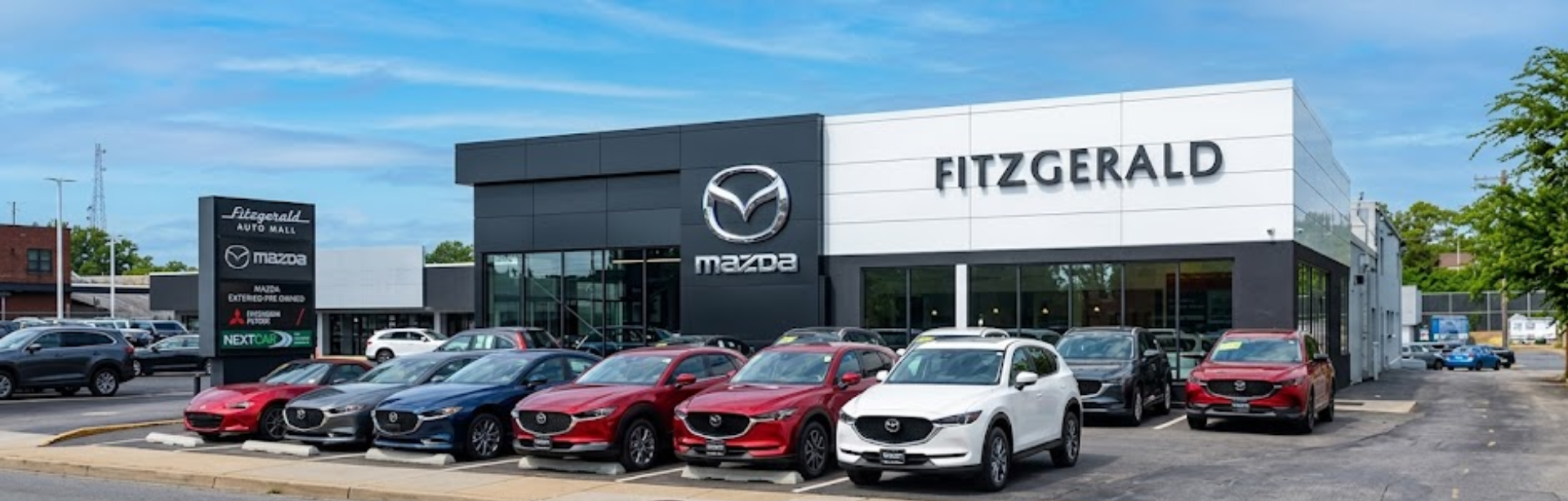
About Fitzgerald Mazda of Annapolis
Welcome to Fitzgerald Mazda of Annapolis, where every visit is more than just a transaction—it's a promise of exceptional service and genuine care. As part of the esteemed Fitzgerald Auto Malls, one of the largest dealer groups in the U.S., we proudly operate as a 100% employee-owned dealership. This unique ownership model means that every team member you interact with is personally invested in ensuring your complete satisfaction. We’ve carried on founder Jack Fitzgerald’s legacy of no-haggle, no-hassle pricing through our FitzWay Price philosophy, offering you upfront transparency with all required costs included. From extended test drives to same-day financing approval, and even at-home vehicle delivery, we make car buying as seamless as possible. Our commitment to customer satisfaction is reflected in our multiple DealerRater/Cars.com Consumer Satisfaction Awards in 2024 and 2026. Our bilingual sales team (se habla español) is here to assist you, whether you’re a first-time buyer, military personnel, or a college graduate benefiting from our purchase incentives. With amenities like complimentary snacks and beverages, a pet-friendly showroom, and a dedicated children's play area, we strive to create a welcoming environment for everyone. Plus, our eco-friendly certification underscores our dedication to sustainability, aligning with our community-focused initiatives like free car seat safety checks and pet adoption events. In our service department, your vehicle is in the hands of factory-certified Mazda technicians, each boasting over a decade of experience. We enhance your service experience with perks such as complimentary car washes, multi-point inspections, and even a video walkaround of your vehicle to ensure transparency in every repair. Our award-winning service is backed by a 12-month/12,000-mile warranty on parts and labor, providing peace of mind with every visit. At Fitzgerald Mazda of Annapolis, we're not just about selling cars—we're about building lasting relationships and contributing positively to our community.