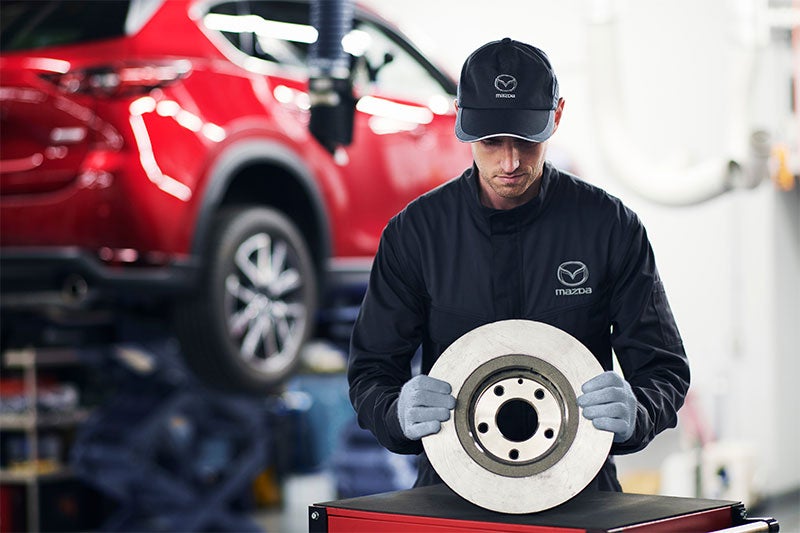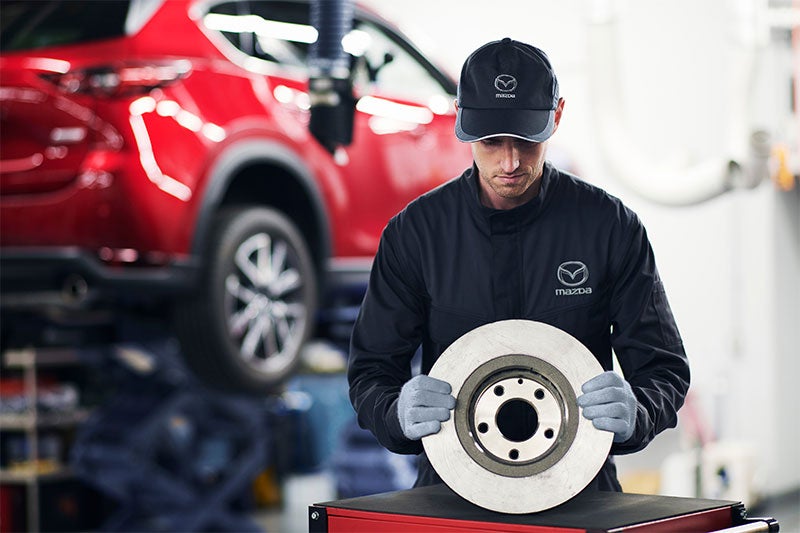
Your brakes are the most important safety system on any vehicle, and Mazda is no exception. Whether you drive a 2026 Mazda CX-5, a Mazda3 Sedan, or any other model in the lineup, staying on top of Mazda brake service is a simple, responsible way to protect yourself, everyone else on the road, and the vehicle you invested in. And with wetter, slicker streets in our near future here in Annapolis, Maryland, having your brakes in top shape is crucial.
Mazda has earned a reputation as the Safest New-Car Brand according to Consumer Reports, and the 2026 lineup swept the IIHS TOP SAFETY PICK+ awards across nearly every model. That kind of safety performance starts with well-maintained brakes.
Why Mazda Brake Service Matters
Brakes do a lot of work every day. Stop-and-go traffic, highway driving, and even parking lot maneuvering all put wear on your brake pads, rotors, and fluid. Skipping routine brake service means you don’t have the opportunity to catch issues before you’re experiencing longer stopping distances, increased wear on other components, and potentially costly repairs down the road.The good news is that staying ahead of brake maintenance is straightforward when you know what to look for.
Signs You May Need a Mazda Brake Inspection
A Mazda brake inspection is the best way to catch braking issues early. There are a few common signs that it may be time to schedule an inspection. Squealing when you apply the brakes is the sound of the built-in system meant to warn you of pad wear. If that sound becomes grinding, rotor damage may already be a concern. A soft or spongy feeling when you press the brake pedal can point to a brake fluid issue. Vibration or pulling to one side during braking may indicate uneven rotor wear.If you notice any of these warning signs while driving around Annapolis, Maryland, don’t wait to have your brakes checked. Early action is always the smarter move.
What Happens During a Brake Inspection
During a Mazda brake inspection, a trained technician will evaluate the condition of your brake pads and measure their remaining thickness. They’ll also inspect your rotors for wear, scoring, or warping, and check your brake fluid level and condition.If your pads are getting thin or your rotors show signs of uneven wear, the technician can explain your options clearly before any work begins. Transparency and accuracy are what professional brake service is all about.